Help Tutorial


TCMLncDB is a comprehensive database that systematically characterizes the regulatory landscape between traditional Chinese medicine (TCM) and long non-coding RNAs (lncRNAs) across human cancers. By integrating pan-cancer transcriptomic profiles from TCGA with curated TCM target information, TCMLncDB predicts potential lncRNA-mediated regulatory mechanisms underlying TCM effects in cancer. To support and validate these predictions, we curated 90 experimentally validated TCM–lncRNA regulatory pairs from PubMed-indexed literature. In addition, transcriptomic perturbation data were collected from the GEO database, comprising 435 independent treatment–control pairs derived from 42 TCMs and 128 bioactive TCM ingredients in human samples. These datasets provide expression-level evidence for TCM-induced lncRNA regulation. TCMLncDB further integrates extensive functional annotations, covering more than 8,000 biological terms, including Gene Ontology and KEGG pathways, as well as cancer-specific lncRNA-associated gene modules. A dynamic expression atlas illustrates lncRNA expression patterns across 22 cancer types, enabling comparative exploration of cancer-associated lncRNA dysregulation. Collectively, TCMLncDB comprises 42,536 high-confidence predicted TCM–lncRNA regulatory pairs, providing a systematic and user-friendly platform for exploring TCM-regulated lncRNA networks, functional contexts, and clinical relevance in cancer.
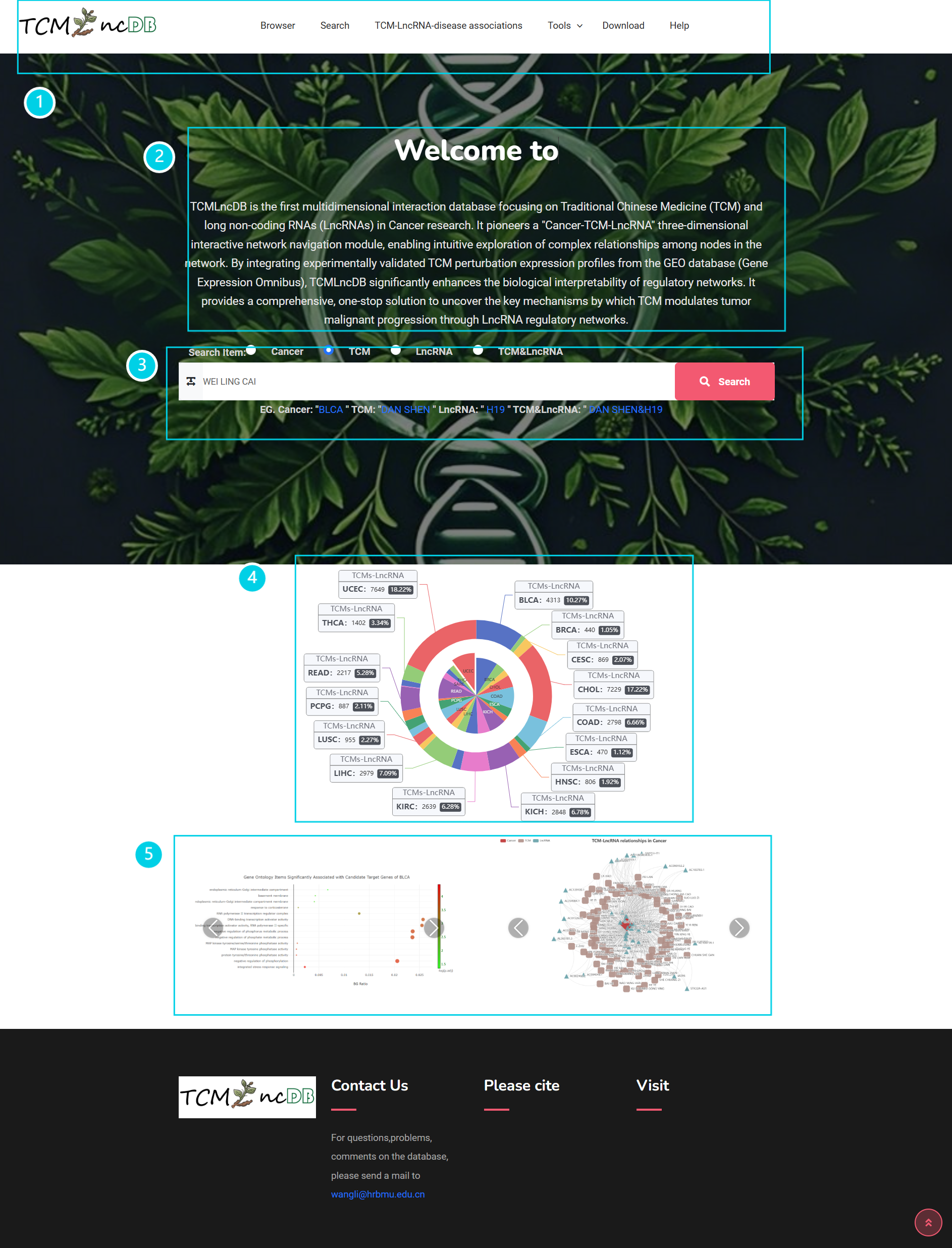
The home page contains tool entrance, schematic diagram and brief introduction to help users understand our database.
1. Main functions of the database are provided in menu bar form.
2. The brief introduction of TCMLncDB.
3. A quick search for Cancers, TCMs, LncRNA and TCM-LncRNA.
4. The number of Cancer-related TCM and the number of TCM-LncRNA.
5. Overview of the images that Tools can provide.

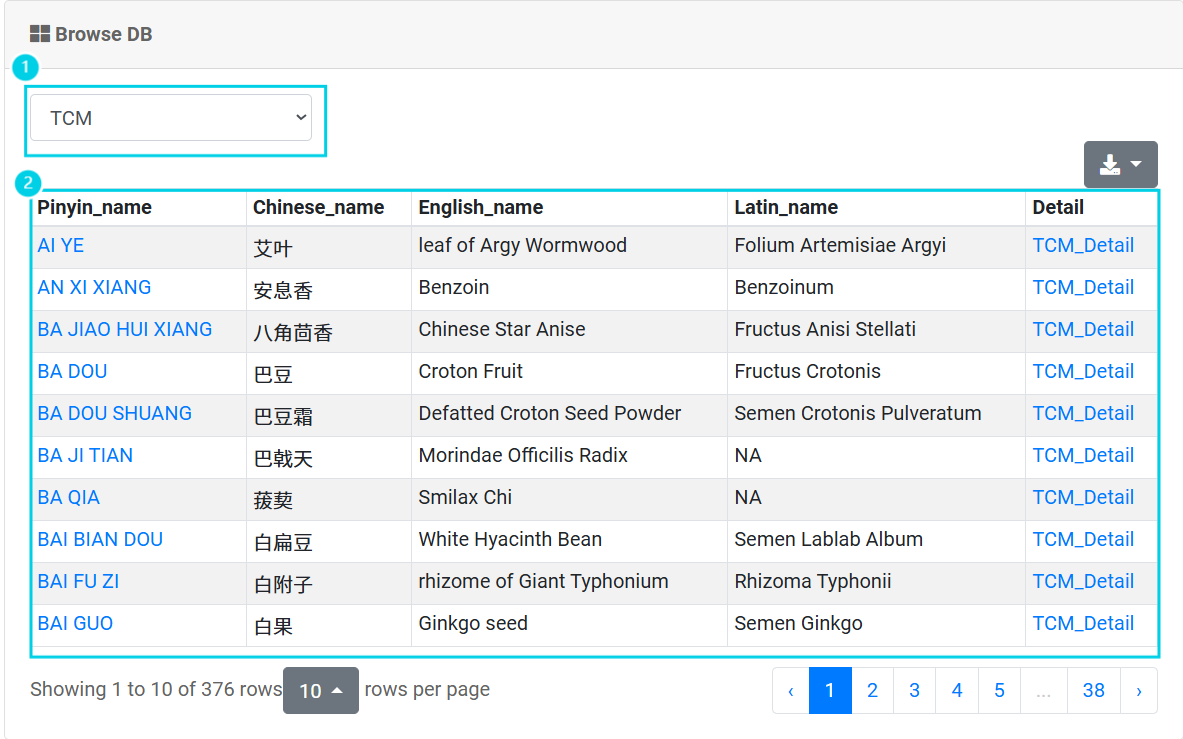
This Browse page contains simple information about TCM, LncRNA, and Cancer to help users understand our database.
1. Select TCM, LncRNA, and Cancer Type.
2. Obtain the corresponding data for the selected types.
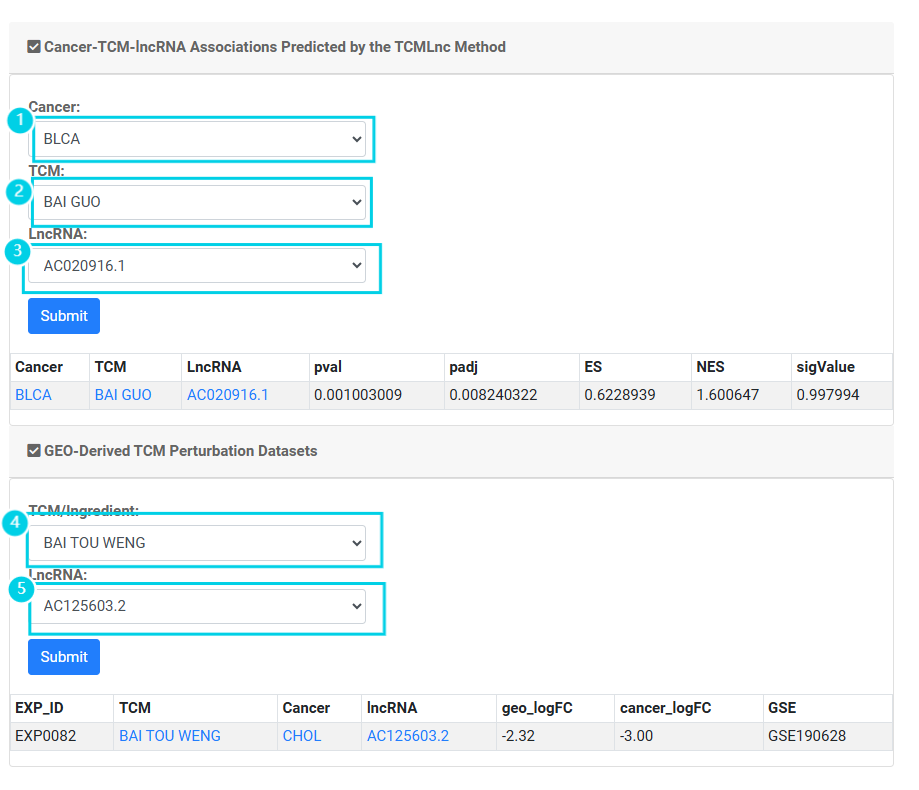
This search page allows you to select specific types of cancer, TCM, and LncRNA to obtain the relationships predicted by the TCMLnc method, or to select specific TCM or Ingredient and LncRNA to obtain TCM perturbation from GEO.
1. Select Cancer Type.
2. Select TCM.
3. Select LncRNA.
4. Select TCM/Ingredient.
5. Select LncRNA.
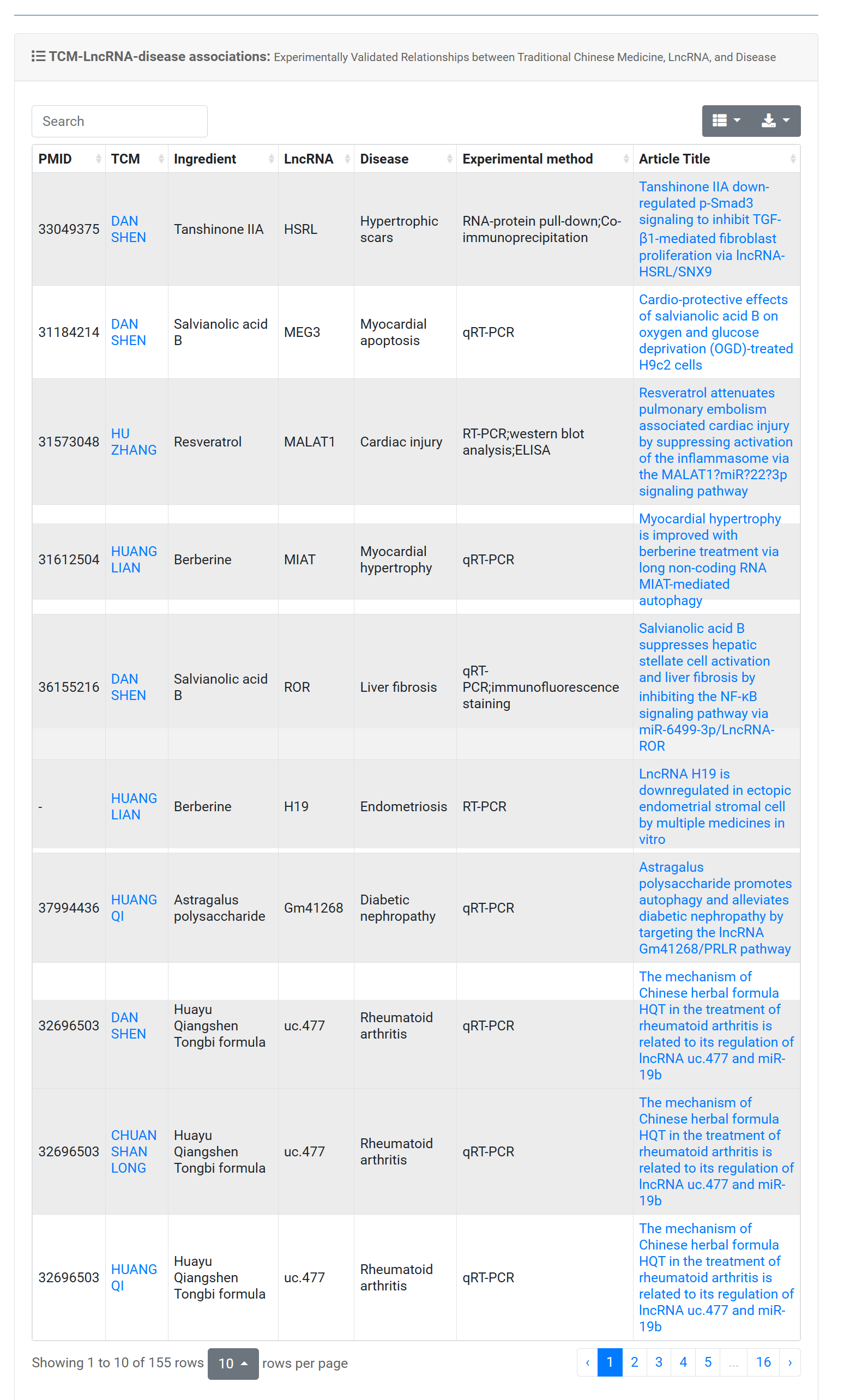
This table lists experimentally validated TCM–lncRNA regulatory pairs curated from published studies. Each entry includes literature-backed evidence demonstrating the role of specific lncRNAs in mediating TCM effects. PubMed links are provided for further reference.
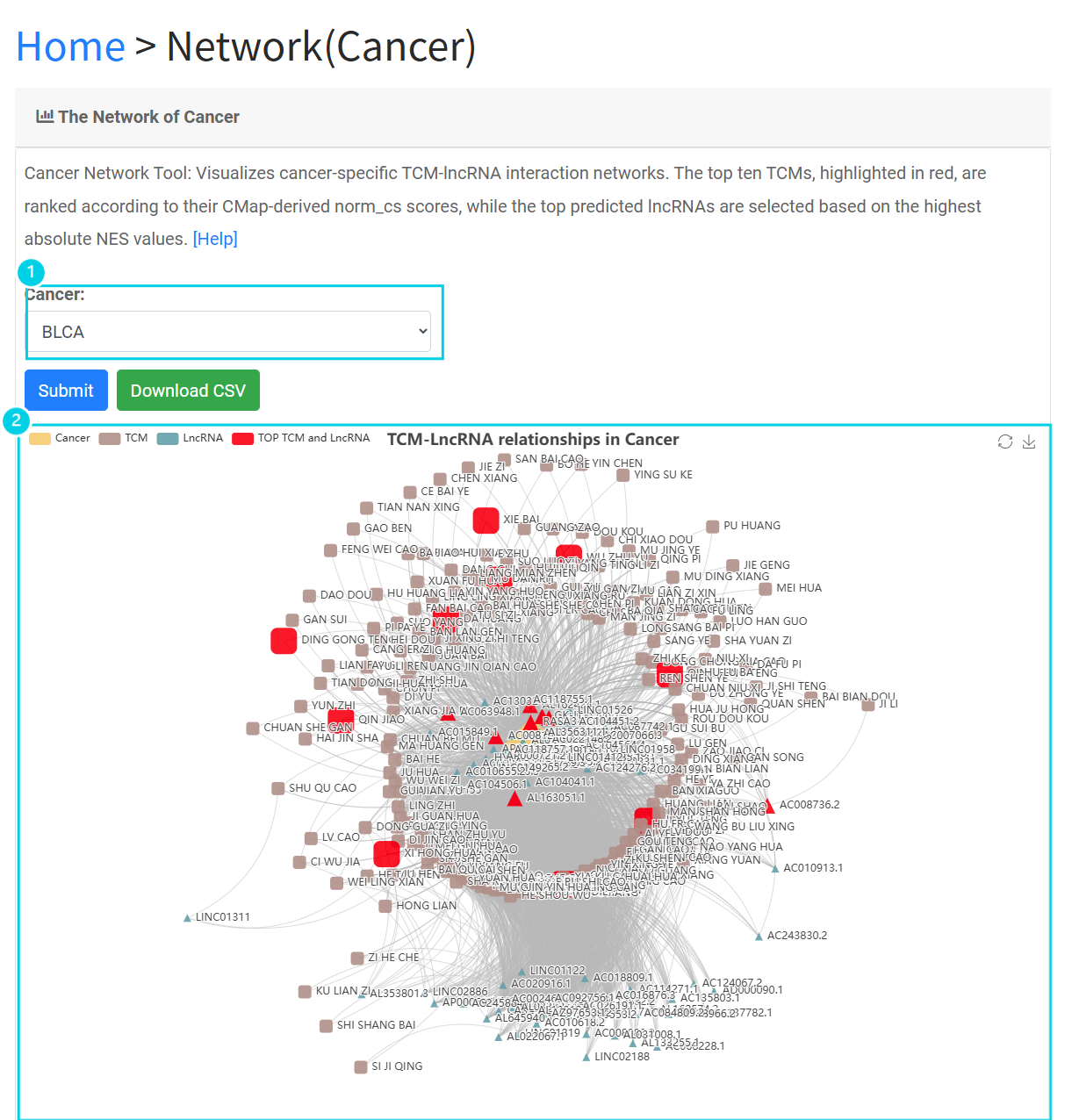
This Network(Cancer) Tools page can select specific Cancer to obtain the TCM-LncRNA relationships.
1. Select Cancer Type.
2. Show the relationship between Cancer-TCM-LncRNA.(The top ten TCMs, highlighted in red, are ranked according to their CMap-derived norm_cs scores, while the top predicted lncRNAs are selected based on the highest absolute NES values.)

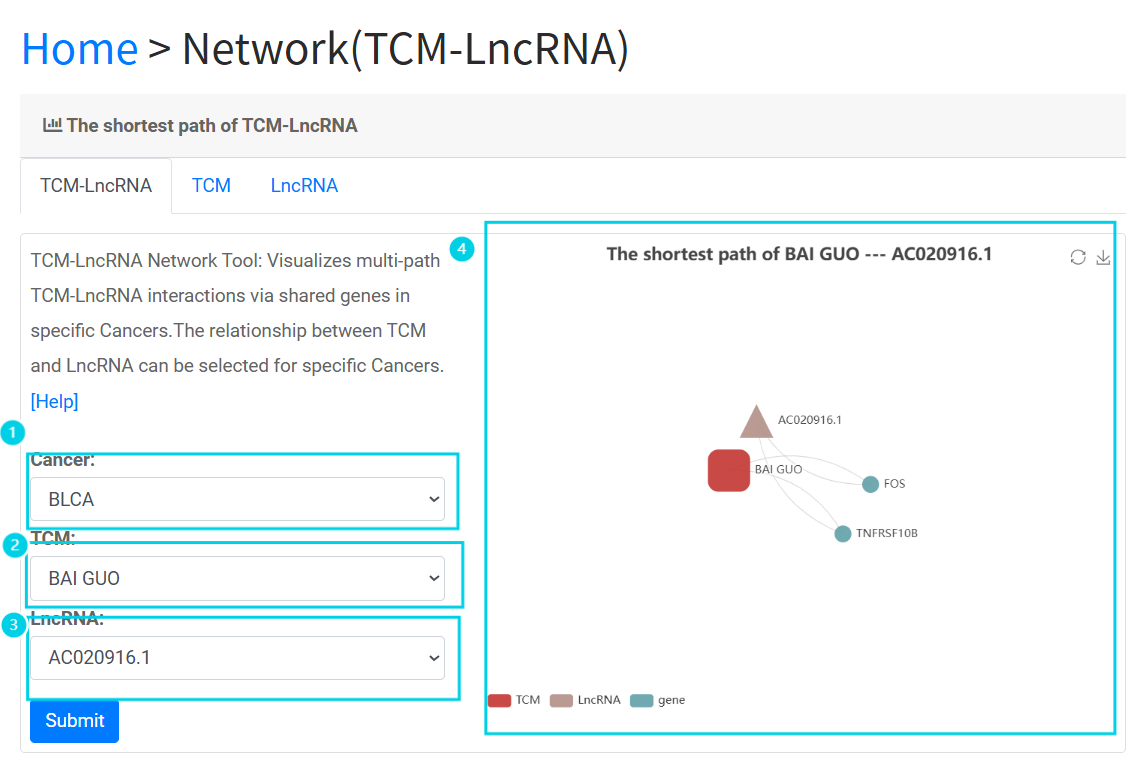
This Network(TCM-LncRNA) Tools page can select specific Cancer, TCM, and LncRNA for relationships and significant Genes in Cancer Network.
1. Select Cancer Type.
2. Select TCM Type.
3. Select LncRNA Type.
4. Show the shortest path of TCM-LncRNA.
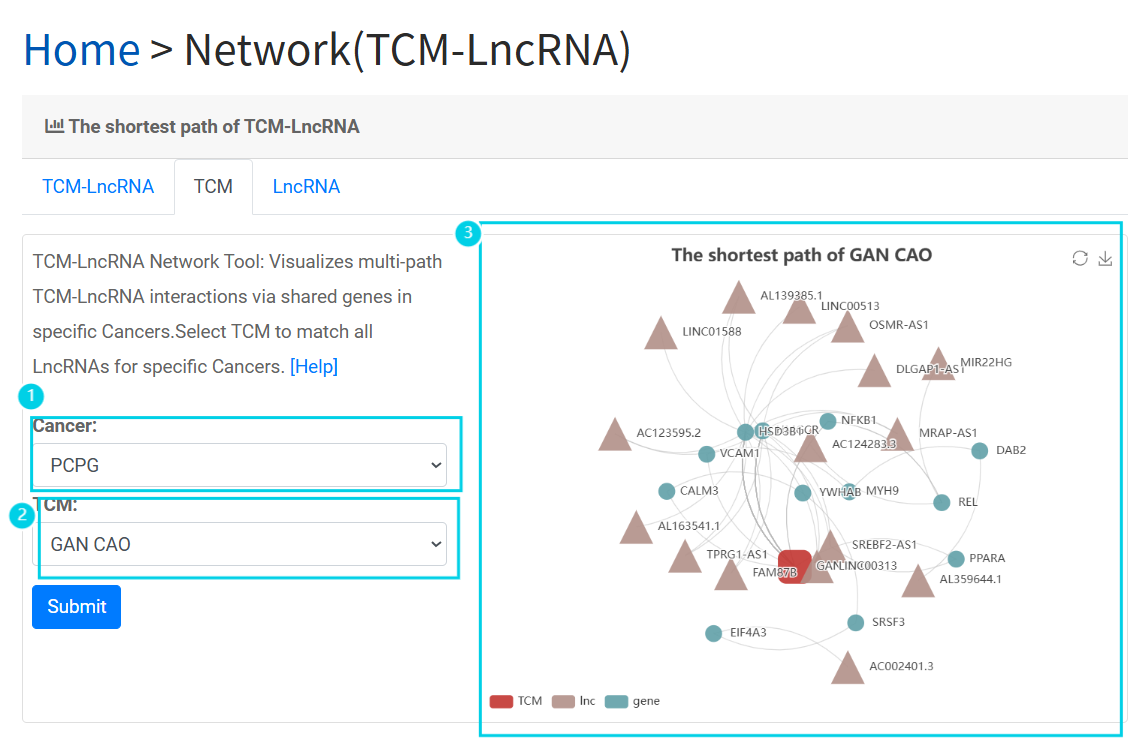
1. Select Cancer Type.
2. Select TCM Type.
3. Show all LncRNAs associated with this TCM under this Cancer.
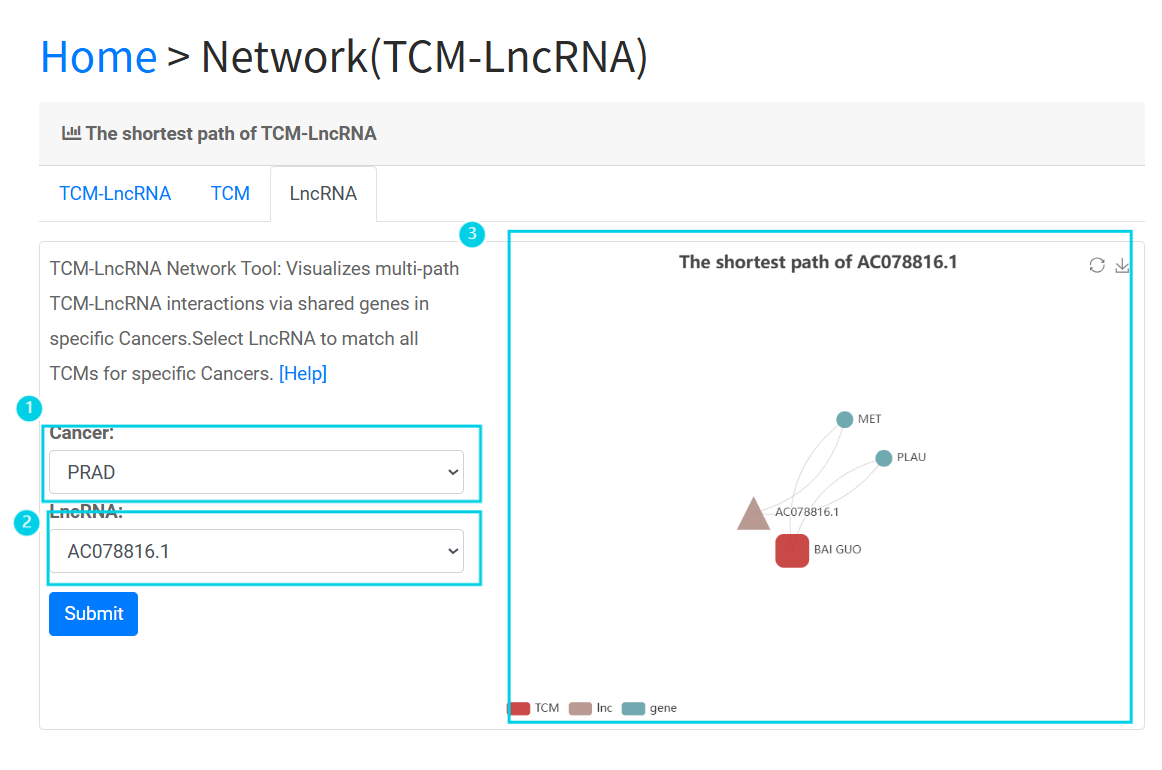
1. Select Cancer Type.
2. Select LncRNA Type.
3. Show all TCMs associated with this LncRNA under this Cancer.

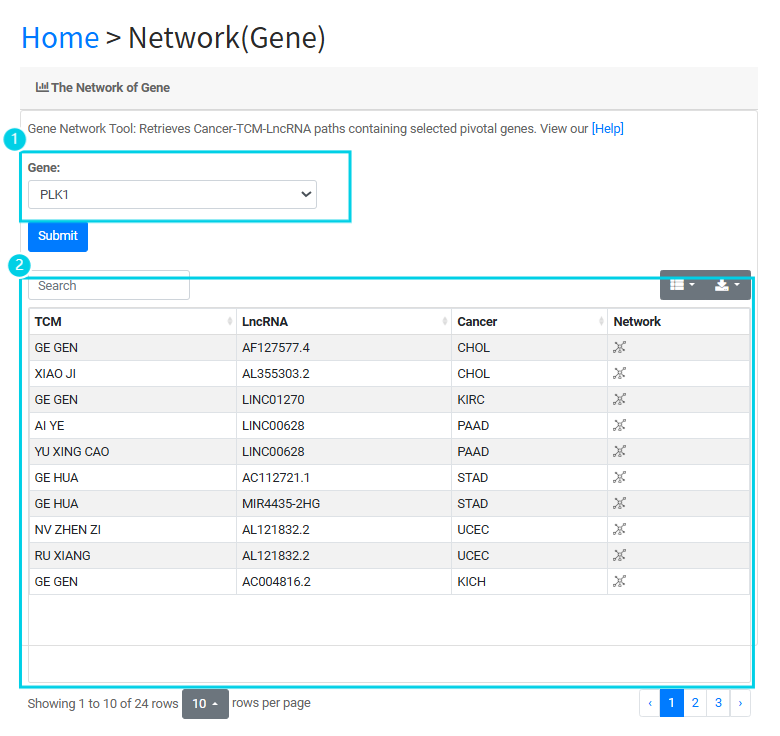
This Network(Gene) Tools page can select specific genes to obtain TCM-LncRNA relationships in different Cancers.
1. Select Gene.
2. Show a table of Cancer-TCM-LncRNA relationships with this gene in the shortest path.

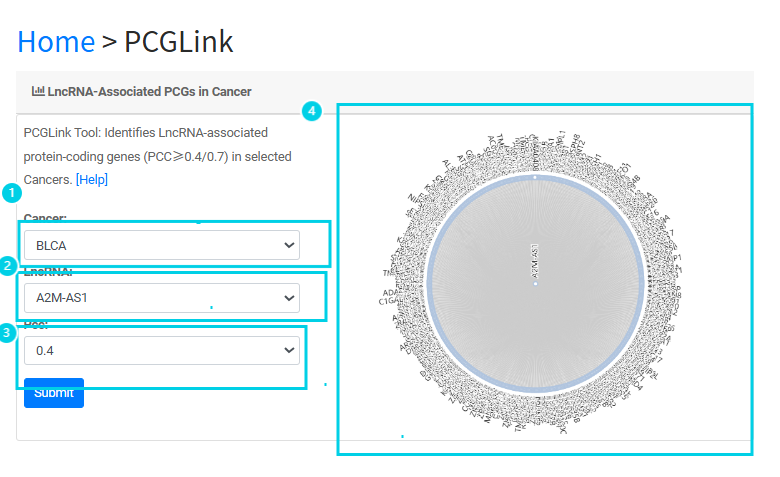
This PCGLink Tools page can select specific Cancer to obtain the pcg of the LncRNA under the Cancer by partial correlation coefficient(The Pcc value can be selected 0.4 or 0.7).
1. Select Cancer Type.
2. Select LncRNA Type.
3. Select PCC value.
4. Show the pcg of LncRNA with the current bias relative PCC value.

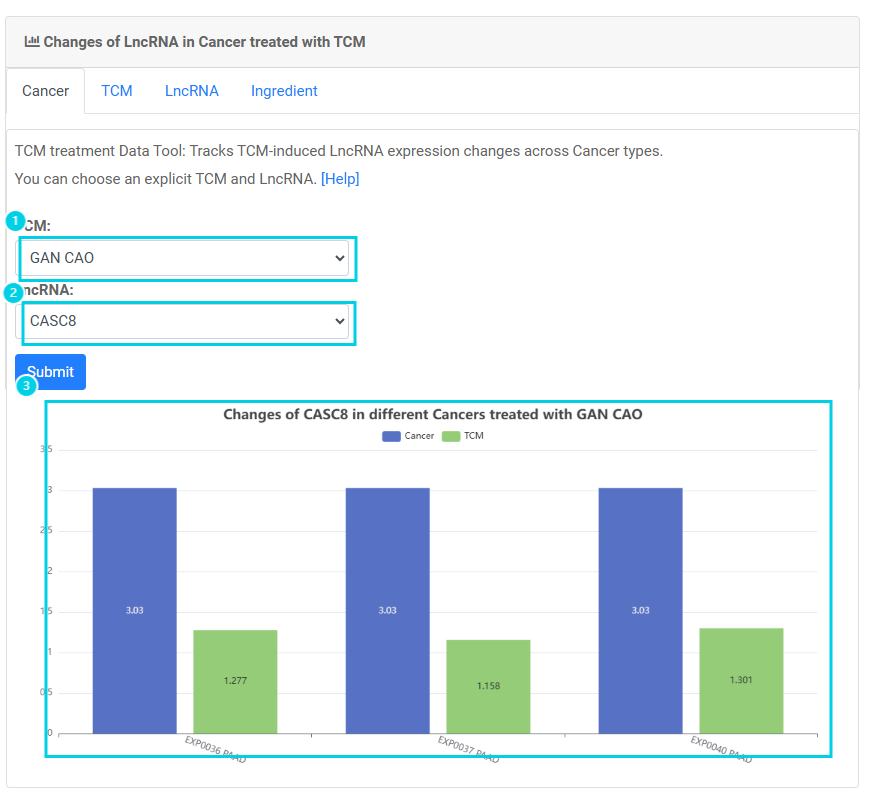
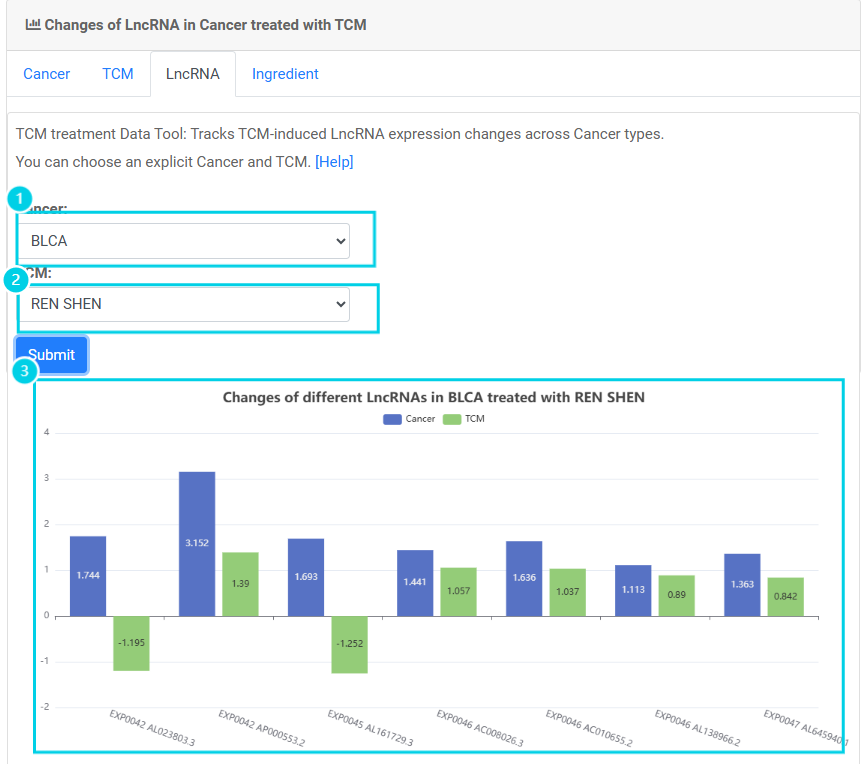
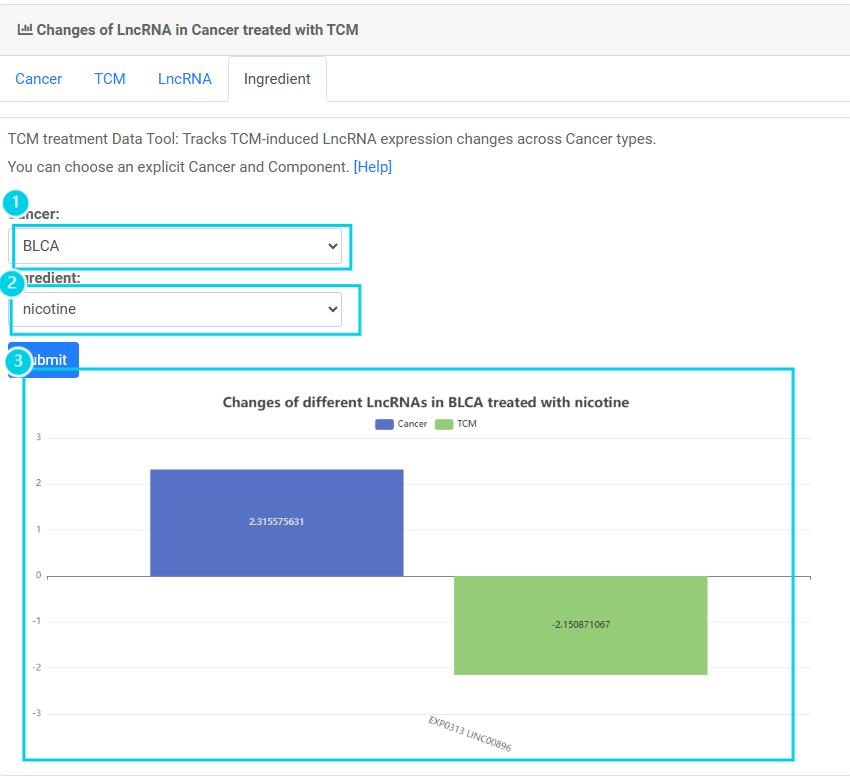
This TCM Treatment Data Tools page can select Cancer, TCM and LncRNA and present the results of TCM perturbations from GEO data.
1. Select TCM Type.
2. Select LncRNA Type.
3. Show Changes of LncRNA in Different Cancers treats with TCM.

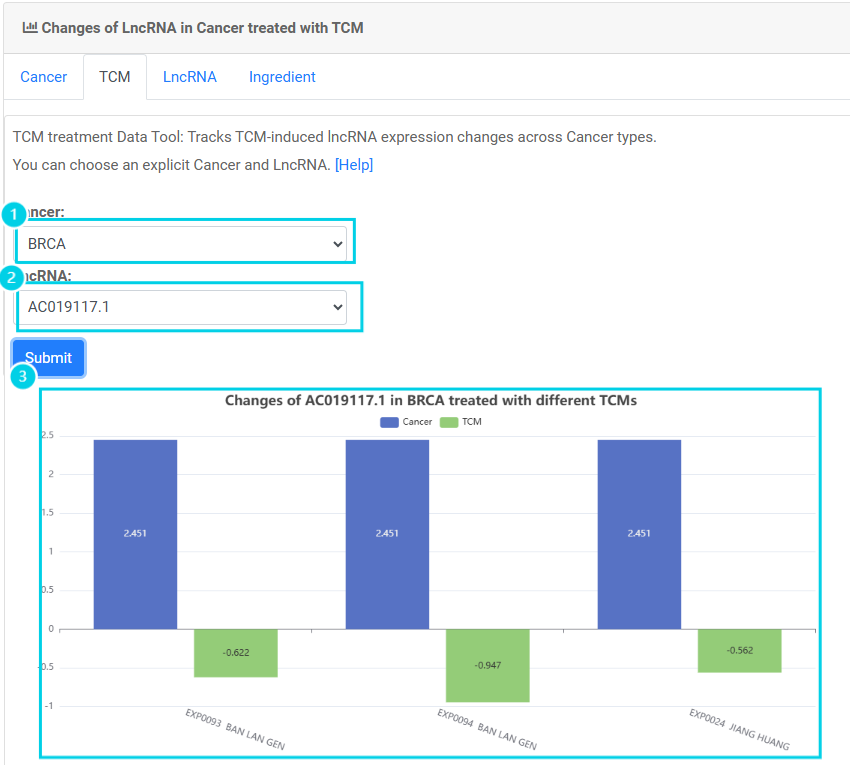
1. Select Cancer Type.
2. Select LncRNA Type.
3. Show Changes of LncRNA in Cancer treated with Different TCMs.

1. Select Cancer Type.
2. Select TCM Type.
3. Show Changes of Different LncRNAs in Cancer treated with TCM.

1. Select Cancer Type.
2. Select Component Type.
3. Show Changes of Different LncRNAs in Cancer treated with Component.

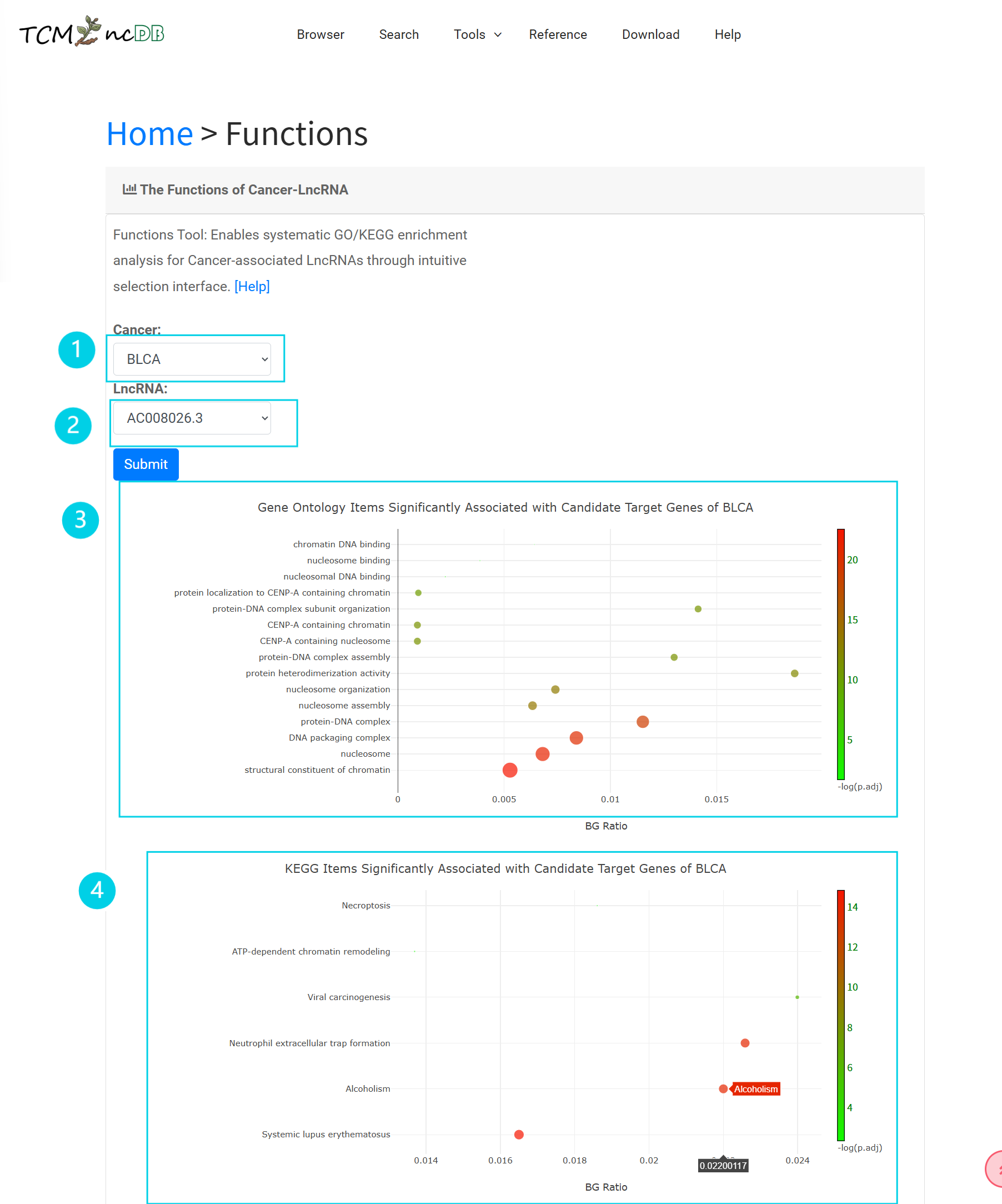
This Functions Tools page can select specific Cancer and LncRNA to obtain the corresponding GO and KEGG analysis.
1. Select Cancer Type.
2. Select TCM Type.
3. Show the results of GO.
4. Show the results of KEGG.
 Left y axis: Description of the function of this LncRNA in this Cancer.
 Right y axis: Value of -log(p.adj).
 x axis: Value of BG Ratio.
 Point size: The square root of count.

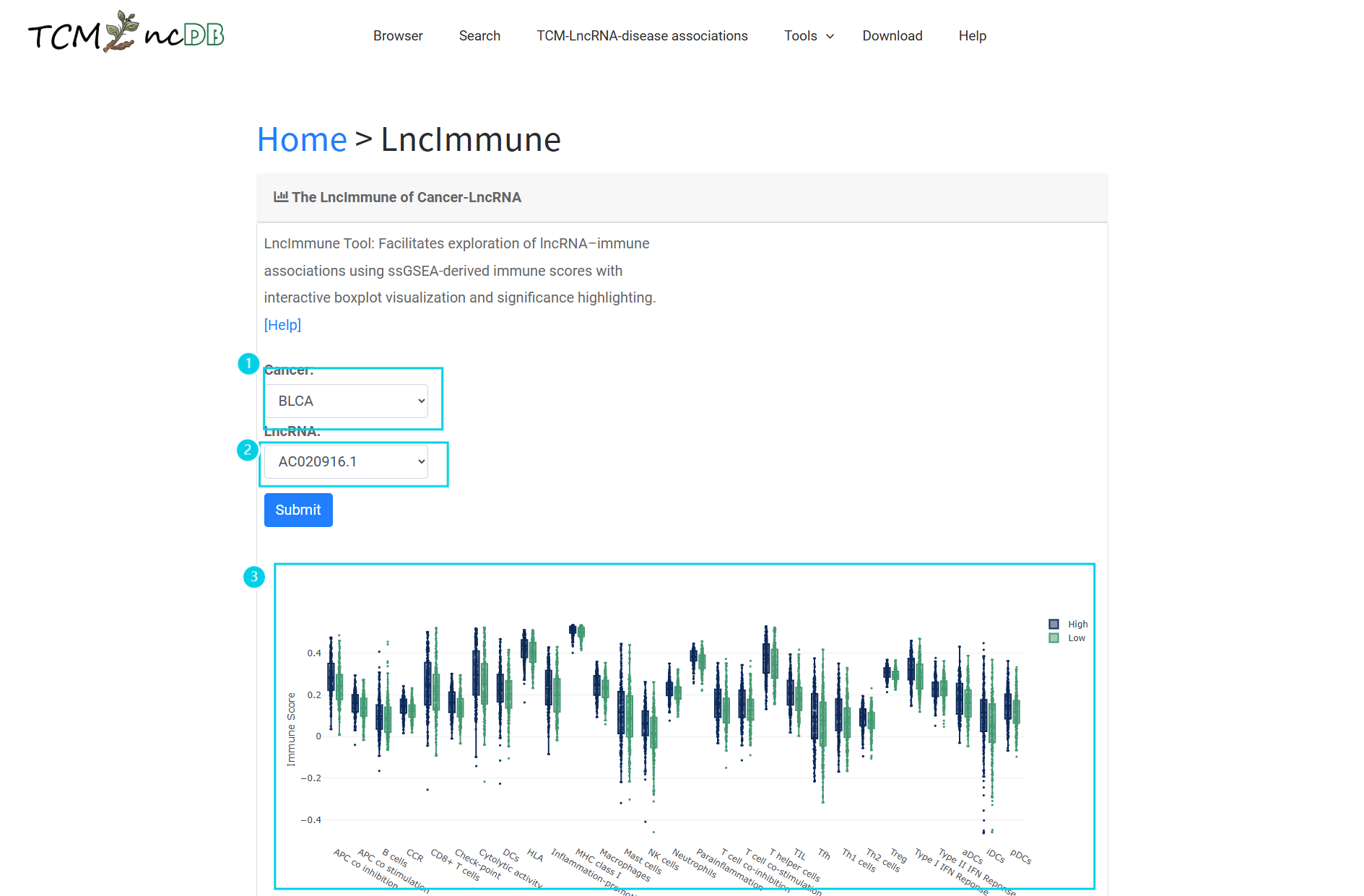
This LncImmune Tools page can select specific Cancer and LncRNA to explore their immune associations via ssGSEA-derived immune scores, visualized through interactive boxplots with significance highlighting.
1. Select Cancer Type.
1. Select LncRNA Type.
2. Show the results of LncImmune.
 y axis: Immune Feature.
 x axis: Immune Score.

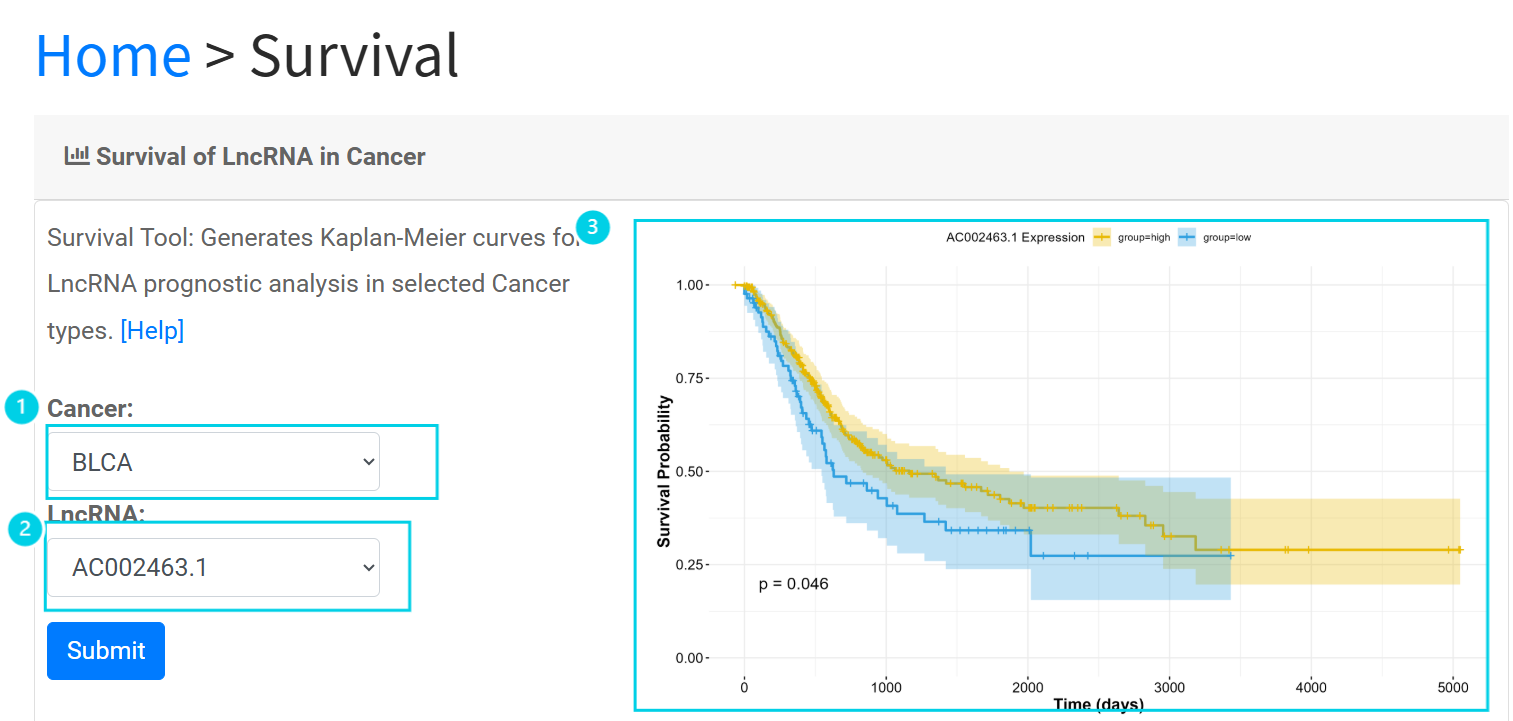
This Survival Tools page can select specific Cancer and LncRNA to obtain the corresponding Survival analysis.
1. Select Cancer Type.
1. Select TCM Type.
2. Show the results of Survival.
 y axis: Survival probability.
 x axis: Time in days.